




Imam Hussain: The Timeless Driving Force Behind the Resistance
Throughout history, militaries fighting defensive wars across the world have been driven by national pride and the defence of sovereignty. While this has served as a powerful motivator in anti-colonial struggles throughout the Global South, it has rarely been sufficient to cultivate lasting resilience in nations that have been militarily and economically devastated for decades by empire. It is as though, once a certain threshold of destruction is reached, the invaded nation either resigns itself to occupation or becomes paralysed in a prolonged state of stagnation, verbally rejecting defeat while allowing resistance to wither.
However, when we observe nations within the Axis of Resistance confronting the same imperial forces, something markedly different emerges. Their struggle for sovereignty reveals a depth of resilience and perseverance that modern history has seldom witnessed.
To the non-Muslim eye, particularly in the Western world, a shared Shi’a Islamic ideological force has become increasingly visible across several fronts of the Axis outside Palestine, in Lebanon, Iran, Iraq, Yemen, and even influencing Sunni resistance factions in Palestine. This ideology has unmistakably distinguished them from much of the Muslim world’s political establishment, governments that have not only abandoned the Palestinian cause, but in many cases funded and facilitated Zionist colonialism and its genocide.
So what is it within Shi’a Islam that enables the Resistance to continue fighting, and to claim victory, despite immense loss of life and the destruction of entire societies?
The answer lies not in the ‘what’, but in the ‘who’: Imam Hussain ibn Ali.
The Tragic Saga of Karbala
The stage is set in the year 680 AD (61 AH), on the plains of Karbala in present day Iraq. It is only fifty years after the demise of the Holy Prophet Muhammad, and under the reign of tyrannical rulers who had usurped the position of caliph, the state of the Muslim world had already degenerated to such depths that Islamic society began to resemble the pre-Islamic age of savagery and ignorance.
Under the rule of Yazid, remembered as one of the most vile and ruthless of the Umayyad caliphs, state sponsored murder, theft, exploitation, and genocide became rampant. Islam itself stood at risk of being hollowed into a shell of a religion. Yazid understood that legitimising his rule required the allegiance of Imam Hussain, the grandson of the Holy Prophet. That allegiance was demanded under threat of death.
This was a decisive moment. Imam Hussain recognised that the only response capable of preserving truth and restoring moral order was open defiance.
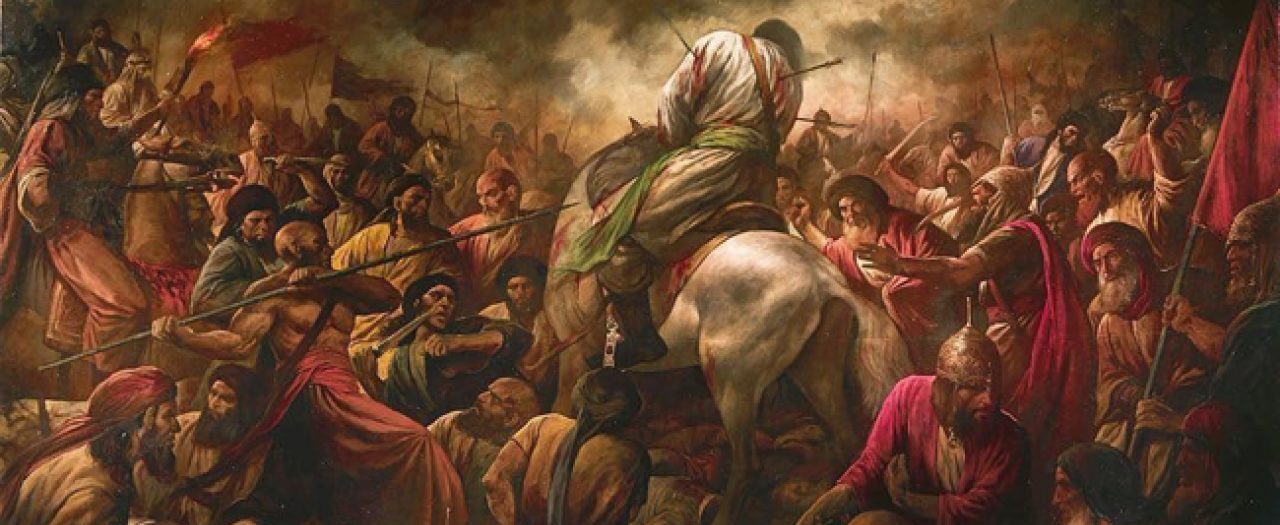
On his way towards Kufa, he and his small caravan of between 72 and 120 people, consisting of his family and loyal companions, were surrounded in the desert of Karbala by an army of at least 30,000, dispatched by order of the caliph to extinguish dissent and crush any attempt at resistance. The camp of Yazid cut off access to the Euphrates River, leaving Hussain’s caravan without water for three days. During that time, the generals of the opposing camp presented ultimatums that amounted to a choice between amnesty and riches, or death.
For Hussain and his companions, the matter could be reduced to its true essence: humiliating submission or death.
A battle was inevitable. Hussain knew material victory was impossible. Yet a stand had to be made. Some have portrayed him as a man seeking death, but in reality, he valued life so profoundly that a life lived under tyranny was unworthy of being lived. This conviction is captured in his words:
“Let the believer earnestly desire meeting God, for I do not consider death to be anything but bliss, and living under tyrants anything but humiliation.”
The battle commenced. One by one, his companions, the men of his household, and even several of his children entered the battlefield and were struck down after fighting valiantly.
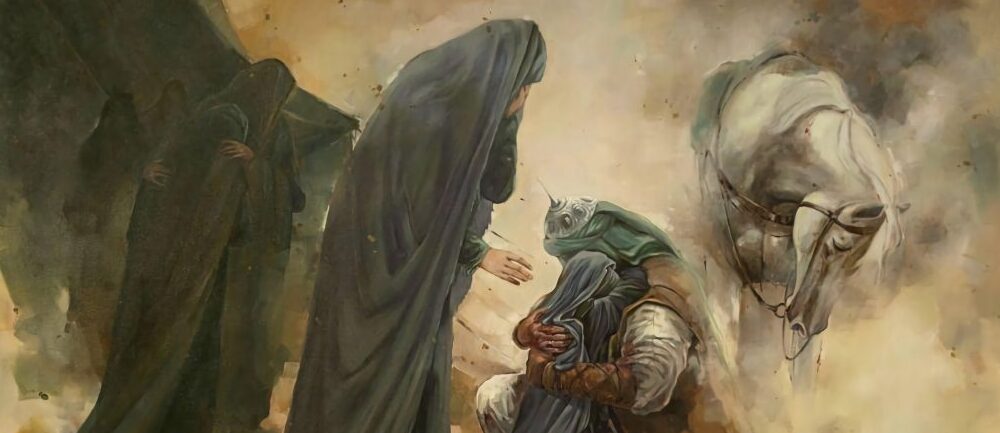
On the tenth of Muharram, the day of Ashura, his camp was massacred, leaving only a small group of survivors including his sister Zainab, several children, and his son Ali ibn Hussain. They were taken captive in chains and marched to Kufa to face the governor Obeidallah ibn Ziad, and then to Damascus to stand before Yazid.
The purpose of these encounters was humiliation. What followed instead was exposure.
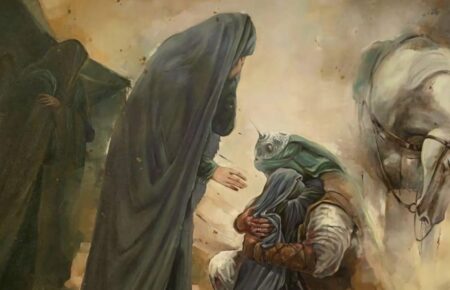
Ali ibn Hussain and Zainab delivered powerful sermons that publicly condemned both ibn Ziad and Yazid, unsettling their authority and igniting anger and panic within their courts. The sermon delivered before Yazid in Damascus proved particularly devastating, awakening the masses to the true nature of the caliph and to the enormity of his crime in massacring the grandson of the Holy Prophet Muhammad.
Zainab’s address did more than rebuke a tyrant. It preserved Karbala. It ensured that the massacre would not be buried beneath imperial propaganda. It created a ripple of revolution that would travel through centuries, fortifying generations of the persecuted to withstand oppression and genocide.
This is regarded as the true victory of Imam Hussain on that day. In the court of ibn Ziad, when he mockingly asked Zainab, “How do you view what God did to your brother and your family?”, she replied:
“I saw nothing but beauty.”
She did not see beauty in suffering. She saw beauty in truth preserved through sacrifice.
That declaration would echo through time, cultivating perseverance in the hearts of the oppressed. Having witnessed the slaughter of her family, endured abuse and captivity, and confronted two tyrants without trembling, Zainab became the enduring archetype of resilience in the face of catastrophe and the embodiment of Jihad al Tabyeen, the struggle to clarify truth in the midst of distortion.
Echoes of Karbala
Fast forward 1400 years, and the events of the tragic revolution of Imam Hussain continue to animate the lives of Shi’a Muslims. They draw from it in their personal struggles against temptation and corruption, and resistance fronts draw from it in their confrontation with oppression.
From recitations of the saga of Karbala to poetic eulogies delivered before grieving congregations, from protest chants in the streets to battle cries on the front lines, Imam Hussain remains the ever-living paradigm of revolution through sacrifice. His stand continues to drive a growing force of resistance that obstructs colonial ambitions and denies imperial powers uncontested dominance.
The battle of Ashura is not viewed as an isolated historical episode from which abstract lessons are extracted. It is understood as the opening of a long-standing confrontation between two camps: the camp of truth and the camp of tyranny. Those camps did not disappear in 680 AD. They re-emerge in every era.
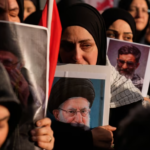
The camp of Hussain is manifested in those who follow his path, and in the Axis of Resistance led by the Supreme Leader of the Islamic Revolution, Ayatollah Sayyid Ali Khamenei. The camp of Yazid is manifested in Western backed Zionist colonial power.
Ashura clarified the line. It exposed what must be resisted and what must never be accepted.
In a speech, Sayyid Ali Khamenei referenced a salutation to Imam Hussain written by his grandson, Imam Muhammad al Baqir: “Oh Aba Abdillah. Indeed, I am at peace with those who are at peace with you, and at war with those who are at war with you, until the Day of Judgement.”
Ayatollah Khamenei explained that this declaration affirms the continuity of the struggle. The confrontation between the camps of Hussain and Yazid did not end with Karbala. It persists until the end of time. One either consciously chooses the camp of Hussain, or drifts into the camp of Yazid, even through the illusion of neutrality.
At gatherings where the Supreme Leader speaks, voices often erupt from the audience declaring loyalty. One of the most emotionally charged declarations echoed the words of a loyal companion of Imam Hussain on the eve of battle.
Hussain told his companions that their arrival in Karbala was enough, and that if they wished, they could depart and spare their lives without diminishing his regard for them. The response of the companion, later echoed by a member of the audience, was:
“May God make life miserable without you, oh our leader. Even if we were to be killed, cut into pieces, burned, have our ashes scattered into the wind, brought back to life and have this done to us a thousand times over, we will never leave you.”
The same words were later invoked regarding Ayatollah Khamenei by Sayyid Hassan Nasrallah, the martyred Secretary General of Hezbollah, illustrating the depth of loyalty that Imam Hussain inspires among leaders within the Axis of Resistance. So profound is this loyalty that some have referred to the Supreme Leader as “the Hussain of our time”.
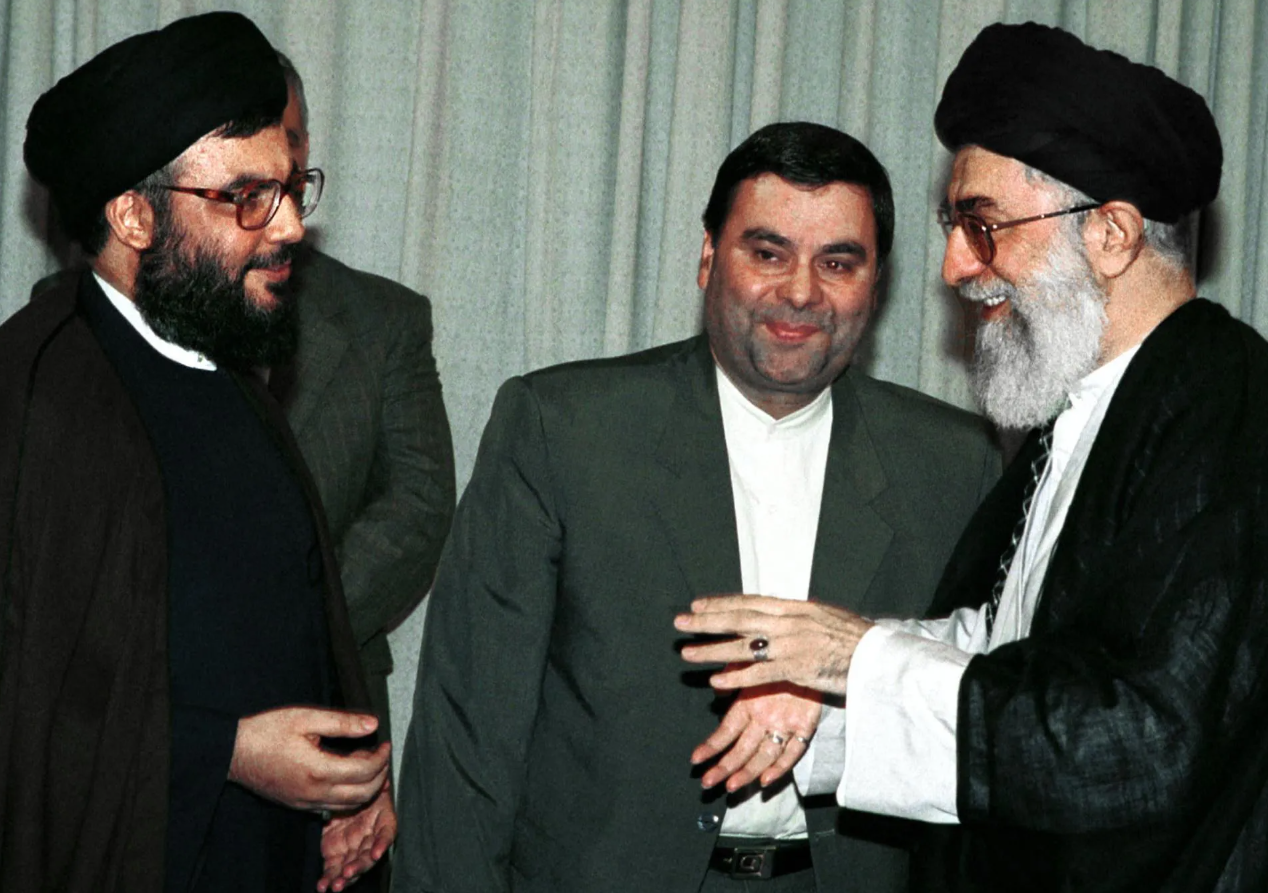
The influence of Hussain ibn Ali extends beyond pulpits and podiums. It reaches the front lines. Soldiers are heard chanting allegiance to the figures of Karbala to summon courage and resolve. Cries of “labbayka ya Hussain” and “labbayki ya Zainab” are not mere slogans. They are declarations of alignment.
Yet more powerful than chants is the lived manifestation of Karbala in the present. As Ayatollah Ruhollah Khomeini stated, “Every day is Ashura, and every land is Karbala.” The clash between truth and falsehood that unfolded fourteen centuries ago reappears wherever oppression confronts resistance.
Khomeini and other resistance leaders have asserted that the Karbala of our time is Palestine. To claim love for Imam Hussain while remaining indifferent to Palestine is, within this framework, a contradiction.
Images emerging from Gaza over the last two years bear a harrowing resemblance to the massacre of Karbala. Brutally dismembered bodies of civilians. Infants deliberately targeted and killed. Tents sheltering families bombed without mercy. Food and water withheld until children succumb to starvation. In the eyes of resistance discourse, Karbala has not merely been remembered in Palestine. It has been re-enacted.
Above all, what drives the Resistance, whether in its militant formations or among civilians who refuse subjugation, is the refusal to accept humiliation. That refusal is the central lesson of Karbala.
Imam Hussain’s stance was never ambiguous. He refused to roll over in exchange for security or wealth. Before the battle commenced, he was offered material comfort and safety in return for allegiance to Yazid. In the end, the choice was stark: his hand in allegiance, or his head.
His defiant words continue to reverberate among Shi’as and resistance leaders across the Axis: “The bastard, son of a bastard, has placed me in a position where I am stuck between two options, between death in battle and humiliation. But far are we from humiliation.”
When Hussain could not be bought, they turned to his brother Abbas. A general in the opposing camp, who was a relative of Abbas, promised him security and amnesty if he abandoned Hussain.
Abbas replied with words that have echoed through generations, and which Sayyid Hassan Nasrallah invoked when the United States allegedly offered him the presidency of Lebanon and immense wealth in exchange for abandoning Palestine: “You offer me security while the son of Zahra has no security. May God curse you and curse your security.”
From that moment, the path was sealed. Martyrdom was not surrender. It was chosen dignity.
And from that choice, the culture of martyrdom was born.
The Influence of Victory Through Martyrdom
Where most revolutions falter is in how they define defeat. When casualties rise and destruction intensifies, morale fractures. Death is interpreted as failure. Loss is interpreted as weakness. Over time, resistance erodes not because it lacks conviction, but because it lacks a framework that can metabolise sacrifice.
Imam Hussain shattered that equation.
Even before reaching Karbala, he knew the confrontation ahead would culminate in massacre. Shi’a tradition maintains that the tragedy of Karbala was foretold to him in childhood. Yet he did not retreat, nor did he compromise. He advanced fully aware that material victory was impossible, because he understood that moral victory could outlive physical annihilation. In doing so, he transformed his death from a loss into a permanent indictment of tyranny. His martyrdom ensured that Yazid’s apparent triumph would never be remembered as legitimacy.
History records countless uprisings that collapsed under sustained loss of life. Many anti-colonial revolts were suffocated not only by military force but by economic strangulation, destabilisation, and psychological exhaustion. In many instances, genocide was not even required. Break the economy, fracture institutions, induce despair, and resistance withers.
The nations within the Axis of Resistance demonstrate a fundamentally different architecture of will.
Only one year after the establishment of the Islamic Republic, Iran faced a US backed Ba’athist Iraqi invasion that lasted eight years and cost hundreds of thousands of lives. What followed were decades of sanctions, targeted assassinations, sabotage, and unrelenting destabilisation attempts. These are conditions that would fracture most states beyond repair. Yet the Islamic Republic did not disintegrate. It consolidated, recalibrated, and emerged as a central obstacle to Western imperial power in West Asia.
At the core of this resilience lies the internalisation of Karbala.
Ayatollah Khomeini articulated this ethos with clarity:
“If our enemy besieges us economically, then we are the children of Ramadan. And if our enemy besieges us militarily, then we are the children of Ashura.”
Hardship was not treated as evidence of defeat, but as confirmation of alignment with a historical struggle that sanctifies endurance.
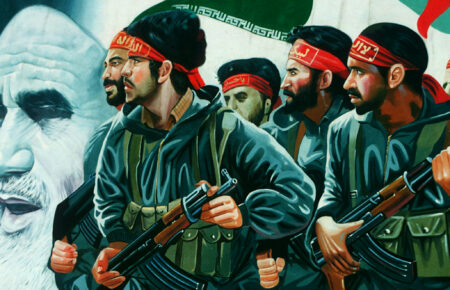
Within the IRGC of Iran, Hezbollah in Lebanon, the Hashd al Shaabi in Iraq, and Ansarallah in Yemen, Karbala functions not as ritual memory but as strategic doctrine. Martyrdom is not framed as tragic waste. It is understood as continuity. The fallen are not counted merely as losses, but as proof that submission has not been secured.
Sayyid Hassan Nasrallah expressed this with unambiguous confidence when he declared, “We are never defeated. When we triumph, we are victorious; and when we are faced with the death of a martyr, we are victorious.” This is not rhetorical bravado. It is a redefinition of victory itself. If fear of death is removed from the battlefield, the enemy’s most reliable instrument of coercion loses its power. Defeat is no longer measured by casualty counts or destroyed buildings, but by whether strategic objectives are achieved.
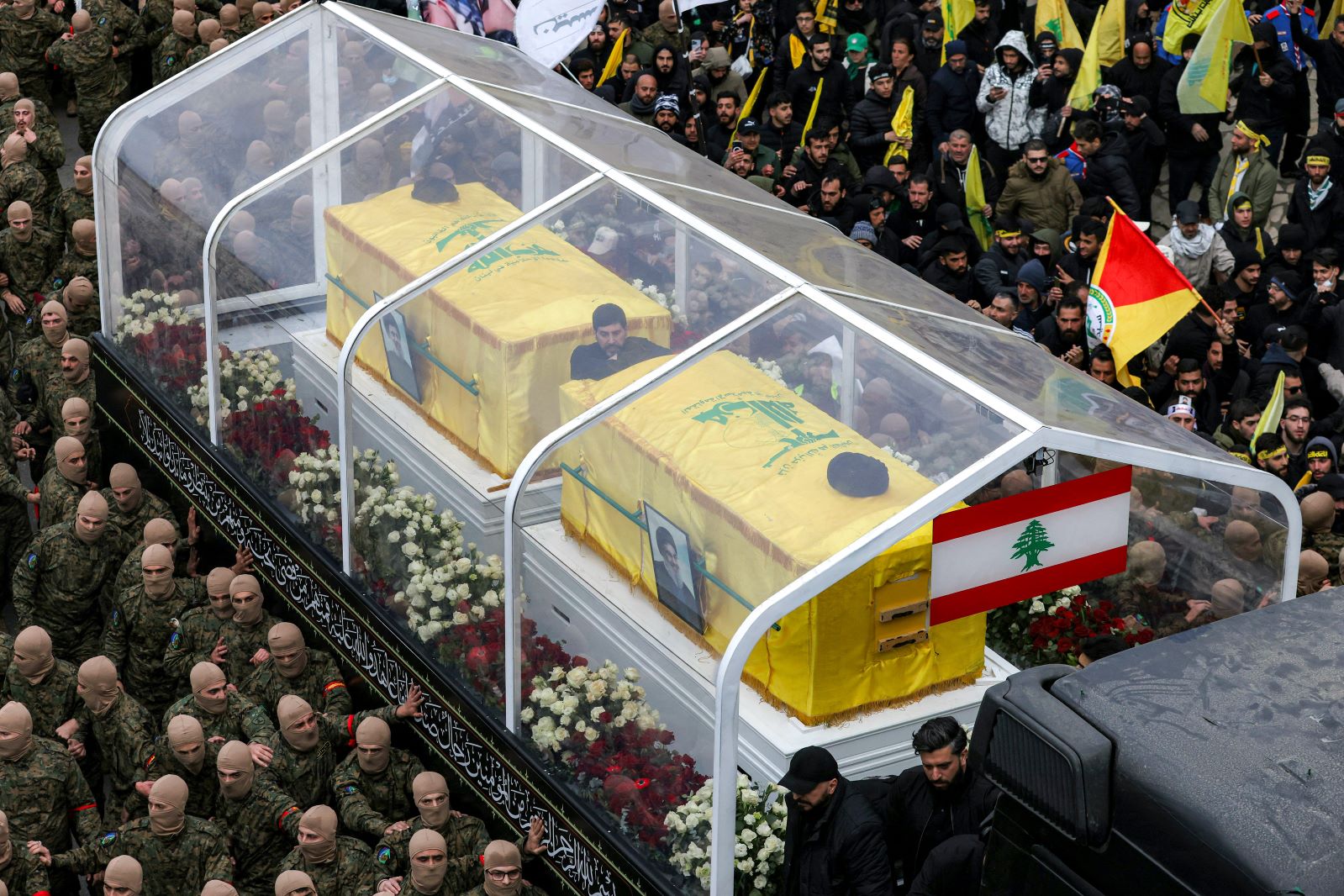
The 2024 confrontation between Hezbollah and Israel illustrates this logic. Despite sustaining significant losses, Hezbollah’s primary objective was not survival at any cost, but the denial of Israeli objectives. When those objectives failed to materialise and the cost of continuation escalated, a ceasefire emerged. The metric was not who bled more, but who achieved what they set out to achieve.
Israeli military doctrine relies heavily on overwhelming destruction and the assumption that attrition will break resolve. Hezbollah’s doctrine rests on endurance rooted in Karbala. One side measures time as a resource that must not run out. The other approaches time as something to absorb indefinitely.
This is the enduring inheritance of Karbala. It does not glorify suffering for its own sake. It removes humiliation from the realm of acceptable outcomes. It denies empire the psychological victory it seeks before territorial victory is ever secured.
The longing for the meeting with God, as Imam Hussain described, does not produce recklessness. It produces steadfastness. And steadfastness, when sustained across generations, becomes a form of power that cannot easily be extinguished.
That is the influence of victory through martyrdom.
That is why Karbala did not end in 680 AD.
And that is why its logic continues to shape the balance of power in our own time.
References:
Karbala timeline and core narrative sources
- Shaykh al Mufid. Al Irshad (sections on Imam al Husayn, the lead up to Karbala, and aftermath).
- Sayyid Ibn Tawus. Al Luhuf fi Qatla al Tufuf.
- Shaykh Abbas al Qummi. Nafas al Mahmum.
- Allama Muhammad Baqir al Majlisi. Bihar al Anwar (relevant volumes on Karbala and its narrations).
Sermons and post Karbala exposure
- Ibrahim Ayati. A Probe into the History of Ashura, Chapter 32: “Sermon of Lady Zaynab in the court of Yazid”.
- Al Islam.org compilation, The World Finally Speaks at the Karbala Tribunals, “The Ninth Court Session” (contains the “I saw nothing but beauty” exchange).
- WikiShia: “Text: Debate of Lady Zaynab (a) with Ubayd Allah b. Ziyad”
Key Ashura doctrine and phrases used in the article
- Ziyarat Ashura (for the “peace with those at peace with you and war with those at war with you, until the Day of Judgement” formulation, which your article discusses via Khamenei’s explanation).
- WikiShia: “Hayhat minna al dhilla” (for attribution context and usage in Shi’a discourse).
Abbas and the “security” refusal
- Sayyid Abd al Razzaq al Muqarram. Maqtal al Husayn, section titled “Security” (contains Abbas’ response rejecting “security” while al Husayn has none).
Khamenei’s doctrine level framing of Ashura as an ongoing front
- Ayatollah Sayyid Ali Khamenei, full text: “The battle between the front of Imam Hussain and the front of people like Yazid, a never-ending battle” (explicitly explains the “until the Day of Judgement” phrasing).
Nasrallah quote used in the article
- MTV Lebanon archive report (Jan 2020) reproducing the quote: “We are not defeated… when we face the death of a martyr, we rise victorious”.
- Daraj (Arabic Lebanese outlet), includes the same “when we win we win, when we become martyrs we win” framing as a cited line in context.
2024 Israel Lebanon cessation of hostilities document
- Announcement of a Cessation of Hostilities and Related Commitments… Towards the Implementation of UNSCR 1701 (PDF hosted by Peace Agreements Database).
- United Nations document page for the same instrument (strongest credibility anchor).
No Comment! Be the first one.