


The Last Revolutionary: Imam Khamenei and the War for Dignity
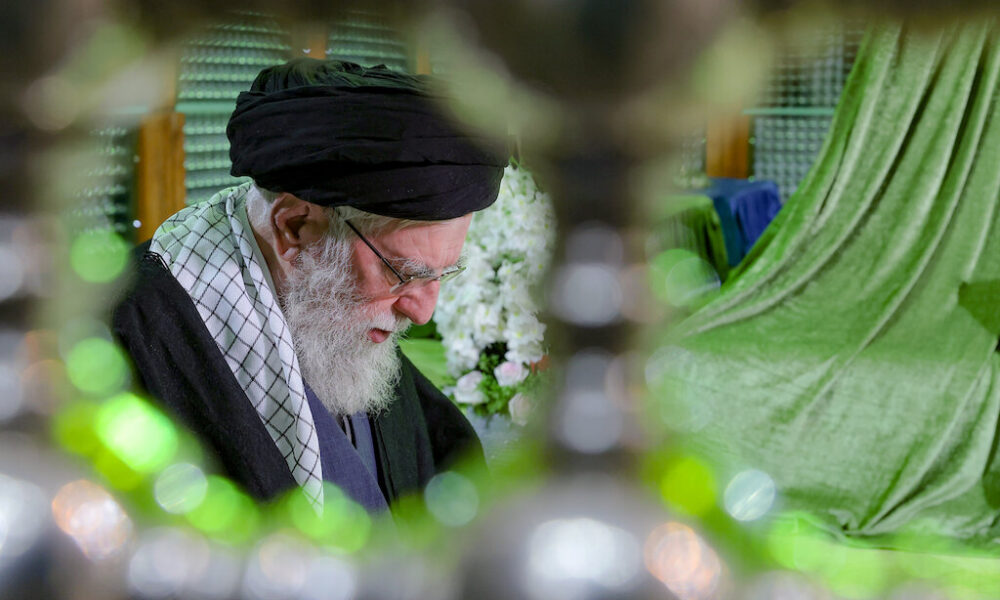
A lover of verse.
A prisoner of war.
A sentinel of revolution.
He read Les Misérables and went on to live a story even Victor Hugo could not have imagined, a life forged in discipline and defiance.
This is the man who once translated novels, and later rewrote history.
A Life Beyond the Caricature
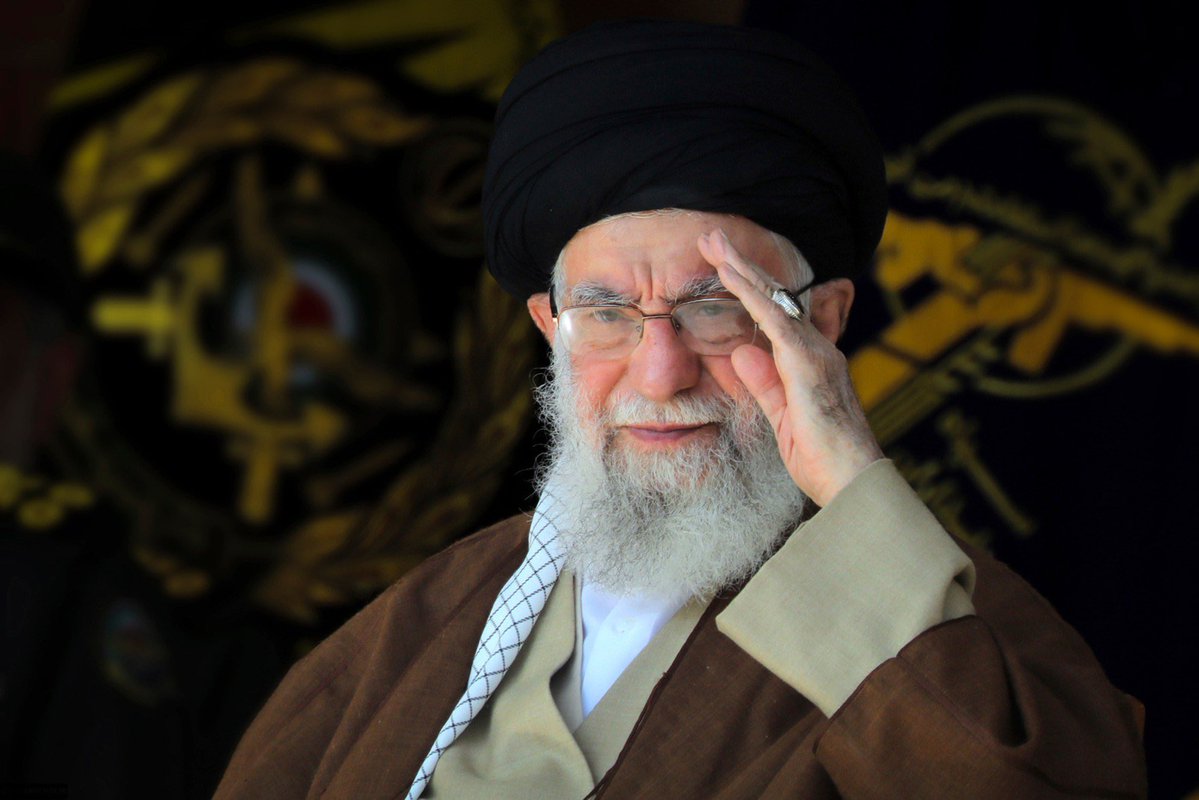
For decades, his name has echoed through Western headlines like a warning, invoked alongside missiles, sanctions, and war. To some, he is a faceless symbol of defiance. To others, the architect of resistance itself. But few outside Iran truly know who Sayyid Ali Khamenei is.
This is not written to appease critics. It is written because the truth of a man cannot be left to his adversaries. It is written because most perceptions of Iran’s Supreme Leader are built on decades of media hostility and geopolitical posturing, where resistance itself is treated as provocation. Behind that image is a man shaped by language, literature, prison, poetry, and faith.
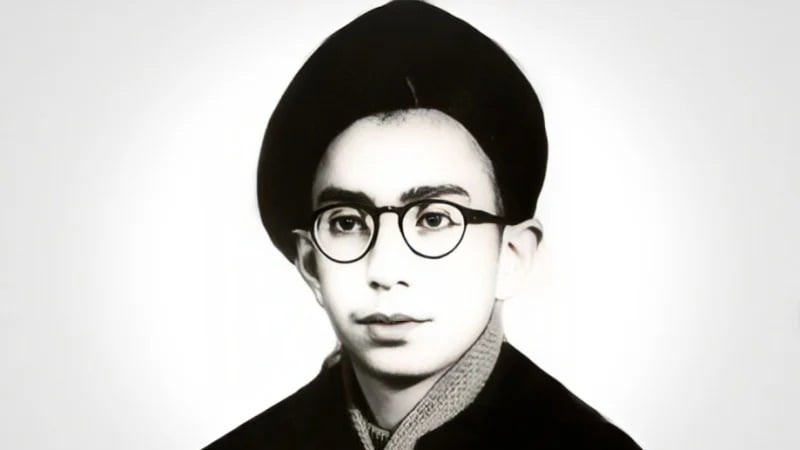
A boy raised in modest Mashhad, son of a cleric, who memorised the Qur’an before most children could write. A dissident imprisoned six times by the Shah’s regime before holding any office. A leader thrust into power after Imam Khomeini, the founder of the Islamic Republic – not by pursuit of ambition, but by the gravity of necessity.
In much of Western discourse, he is reduced to a title. But across Iran and beyond, he is a voice – political, spiritual, intellectual. He writes poetry. He translated Russian literature. His speeches weave Qur’anic exegesis with statecraft. He speaks not as a distant functionary of power, but as a man who has endured war, exile, revolution, and betrayal – and who never abandoned what he considers the battlefield of ideas.
“We do not fear your threats. We do not retreat. The path we walk is one of justice, and we know justice demands sacrifice.” —Imam Khamenei, speech to Basij forces, 2012.
Long before the cameras, he walked to Qur’an lessons in Mashhad’s winter chill. His hands, like his history, carry the scars of a life spent under watch, under fire, and in service of a cause that transcends borders.
The Making of a Revolutionary
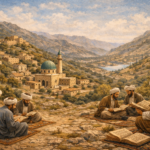
Sayyid Ali Hosseini Khamenei (سید علی حسینی خامنهای) was born on July 17, 1939¹, in the holy city of Mashhad, the second of eight children in a household shaped by scholarship and restraint. His father, Ayatollah Sayyid Javad Khamenei, a modest cleric of Azerbaijani descent, was known not for wealth or stature, but for piety, silence, and a poverty worn as principle rather than misfortune.
Their rented home was small and spare, its basement dim and narrow. Yet within that confined space, something expansive was taking root. Before the age of ten, young Ali had absorbed the Qur’an, Arabic grammar, and classical Persian poetry. Study for him was never mechanical. It was immersion. He moved beyond memorisation into fiqh, hadith, philosophy, and literature, drawn equally to revelation and reflection.
By his late teens, he had travelled to Najaf and Qom, studying under some of the most formidable scholars of the era, among them Imam Khomeini. Those lessons would not remain confined to classrooms or lecture halls. They would shape his intellectual architecture and, in time, the political architecture of a nation.
But seminaries alone did not forge him. It was the tremor beneath the streets.
Under the Shah’s U.S. backed regime, Iran gleamed for foreign cameras while corroding within. Modern façades masked deep fracture. SAVAK, the intelligence and security apparatus of the Pahlavi dynasty, detained and tortured clerics and Marxists alike, seeking to strip Islam from public life and sever faith from governance.
Khamenei’s resistance began early and openly. He delivered lectures denouncing imperial domination and the Shah’s westernisation project, arguing that spiritual sovereignty and political independence were inseparable. The consequences were severe. Six imprisonments. Three internal exiles. Repeated torture.
“They tried to silence me with a bomb,” he recalled in 1981, “but as long as a single breath remains in my chest, I will continue to speak against tyranny.”
In solitary confinement, he recited the Nahj al Balagha from memory and composed poetry silently in his mind. He came to believe that what breaks a man is not pain, but the absence of meaning. His meaning was clear and immovable. Islam, he held, must not survive only in manuscripts and sermons. It must live at the centre of a just society.
By the late 1970s, he had become a living conduit between clerical scholarship and public unrest, between sacred text and collective uprising. When the Shah fell and the Islamic Republic emerged in 1979, Khamenei did not rise as a seeker of office. He stood as one who had suffered for its birth and remained unbroken in the struggle that brought it into being.
The Ascent of a Reluctant Ruler
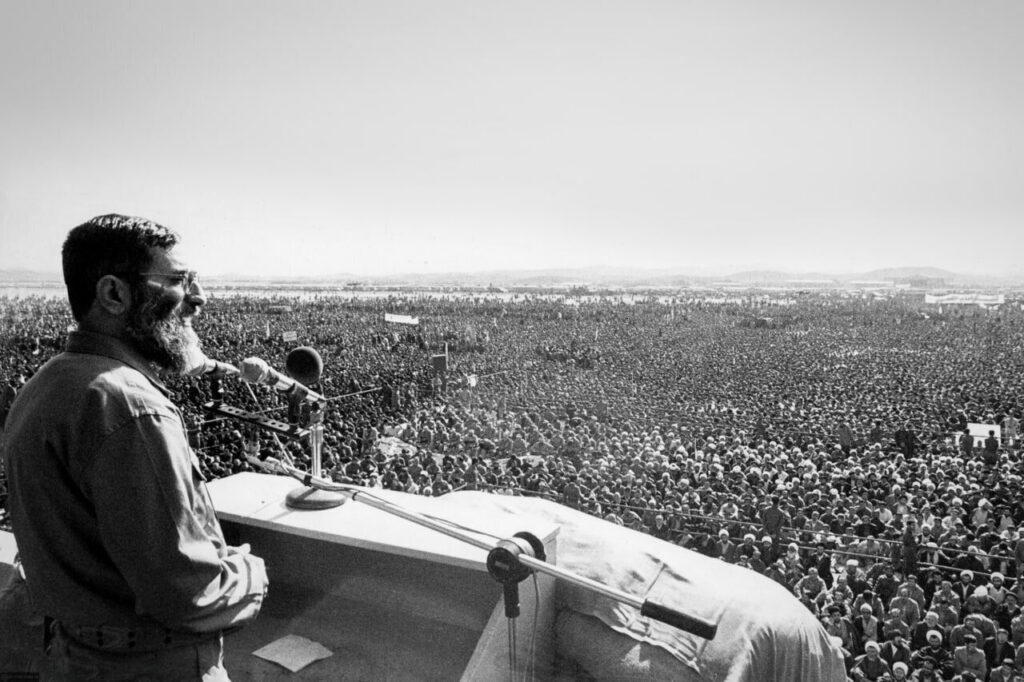
When the revolution succeeded in 1979, Imam Khamenei was only thirty-nine years old, though he had already lived several political lifetimes.
Much of his adulthood had been spent in resistance – lecturing from mosques under surveillance, writing commentary layered in Qur’anic language yet unmistakably subversive, and enduring interrogations designed to intimidate both body and will. The revolution’s triumph did not signal rest. It marked a transformation in responsibility. The struggle was no longer to dismantle a regime, but to construct a state capable of embodying the ideals for which so many had suffered.
Within the newly established Islamic Republic, Khamenei quickly assumed positions of consequence. He was appointed to the Revolutionary Council, helped found the Islamic Republic Party, and became Tehran’s Friday prayer leader – a role that extended far beyond ritual sermon. From that pulpit, he addressed a nation still defining itself, shaping public discourse while articulating the philosophical and theological foundations of the revolution. The Islamic character of the new state was not uncontested. Marxist factions, liberal reformists, and Westernised technocrats each advanced competing visions of Iran’s future. The revolution had removed a monarch, but it had not resolved the question of ideological direction.
His presidency, beginning in 1981, would test him in ways few civilian leaders are ever tested. He assumed office in the immediate aftermath of President Mohammad Ali Rajai’s assassination, during a period saturated with violence and uncertainty. The country was locked in a devastating war with Saddam Hussein’s Iraq, a conflict backed materially and diplomatically by Western governments still unsettled by the Shah’s fall and the hostage crisis. At home, Mujahedin e Khalq (MEK) operatives carried out bombings against government officials and institutions. The Islamic Republic was not consolidating power in peace. It was fighting for survival.
Yet even in wartime, Khamenei did not relinquish his intellectual habits. He continued to draw from classical Persian poetry, translated works from Arabic and Russian into Persian, and anchored his political thought in a synthesis of faith and historical consciousness. Those who worked with him frequently described a personal austerity that mirrored his rhetoric. He rose early, avoided extravagance, and gave away much of his salary. He travelled rarely, even before becoming Supreme Leader, holding that leadership must remain rooted in the soil it claims to defend rather than in the optics of international approval.
He rejected ostentation in dress and environment, preferring shelves of books to ornamented offices. In private meetings, he was known to listen more than he spoke, but when he did speak, he drew from a wellspring of theology, history, and revolutionary memory that few in the room could match.
Then came 1989.
When Imam Khomeini passed away that June, the Islamic Republic confronted not only grief but structural uncertainty. Its founder – jurist, theorist, and political architect – had embodied a singular authority that no obvious successor seemed prepared to inherit. The matter of succession was not merely procedural or clerical. It carried existential weight, for the revolution had been anchored in one towering personality whose absence exposed the fragility of the young state.
At the time, Khamenei was not a marjaʿ (source of emulation) – a requirement many thought essential for the role of Supreme Leader. He had repeatedly rejected the idea that he should succeed Khomeini. But history is rarely swayed by humility.
“I did not seek this burden. I have never claimed I am worthy of it. But if avoiding it means leaving the revolution orphaned, then I must stand where others hesitate.”
(Khamenei’s statement to the Assembly of Experts, June 1989.)
Faced with uncertainty and immense pressure, the Assembly of Experts elected him Supreme Leader in an emergency session, initially describing the appointment as provisional. Many assumed it would serve as a transitional arrangement, a practical response to crisis rather than the beginning of a lasting era. Over time, however, that provisional authority consolidated into permanence, and the man once viewed as an interim figure would come to define the Republic’s ideological continuity.
His leadership would prove neither symbolic nor passive.
Building the Pillars of Resistance
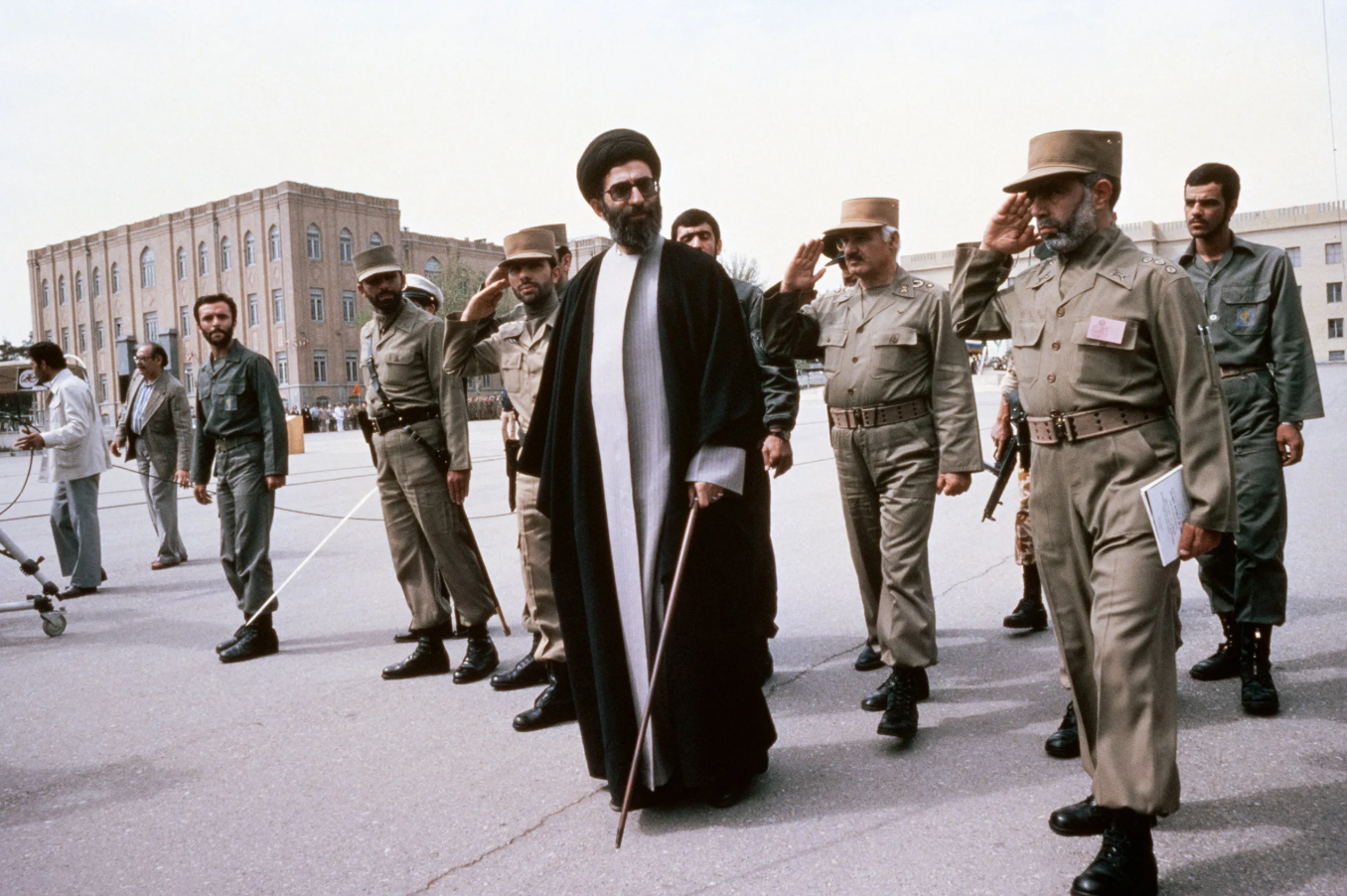
Imam Khamenei did not seize power. He inherited it in 1989 under scrutiny, without the immediate spiritual stature of his predecessor, and without any guarantee that authority would consolidate around him. What followed was not the abrupt authoritarian entrenchment often portrayed in Western discourse, but a gradual and deliberate consolidation shaped by ideology, strategic patience, and institutional reinforcement.
Unlike Imam Khomeini, whose religious authority preceded the state itself, Khamenei had to cultivate his influence within it. His authority did not emerge from spectacle or personality cult, but from positioning himself as the ideological centre of a system persistently challenged from within and encircled from without. In a republic born under pressure, endurance required architecture rather than charisma.
One of the most significant manifestations of this consolidation was the strengthening of Iran’s doctrine of self-reliance, particularly through the expansion of the Islamic Revolutionary Guard Corps (IRGC). Under his leadership, the IRGC evolved from a revolutionary defence force into a multifaceted military, intelligence, and economic institution, embedded deeply within the state’s strategic framework.
Its external branch, the Quds Force, became the principal channel of support for resistance movements across the region: Hezbollah in Lebanon, Hamas and Islamic Jihad in Palestine, and later various movements in Iraq, Syria, and Yemen. For Khamenei, such alliances were not merely geopolitical calculations but expressions of moral alignment.
“To fight oppression is to worship… and we will never bow before an empire that knows no justice.” (Quds Day speech, 2011.)
He has repeatedly described Palestine as “the litmus test of our era,” framing the struggle not solely as a territorial dispute but as a moral measure of global conscience. His explicit support for armed resistance movements has rendered him deeply respected across much of the Global South, even as Western and Zionist media reduce him to the language of caricature, labelling him a “shadowy” cleric or “terror sponsor.” Such descriptions obscure the broader contradictions of an international order in which those who authorise sanctions regimes, covert destabilisations, and drone campaigns reserve for themselves the authority to define terrorism.
They also overlook that Iran, under Khamenei’s leadership, has not initiated a war, and that its refusal to recognise Israel is framed not as hostility toward Judaism but as solidarity with a displaced and occupied people.
Domestically, Khamenei has consistently favoured institutional architecture over personal dominance. He appoints key officials, delineates strategic red lines, and permits elected governments, whether reformist or conservative, to operate within the ideological parameters of the revolution. The model is not passive. It is structured for continuity, designed to outlast the lifespan of any single leader.
Through decades of political turbulence, he has remained engaged in scholarship. His writings encompass Qur’anic interpretation, Islamic governance, and sustained critiques of Western philosophical thought. He references Fanon and Foucault alongside Al Ghazali and Imam Ali, weaving anti colonial analysis with classical Islamic tradition. His personal library reportedly spans thousands of volumes, ranging from Russian literature to foundational works of fiqh.
Even critics who oppose his politics concede that Khamenei cannot be dismissed as ceremonial. He is both thinker and strategist, and through a combination of intellectual discipline and ideological coherence, he has come to symbolise more than the state he leads. For supporters across the resistance axis, he represents one of the last figures in contemporary politics who speaks openly against imperial hierarchy without compromise or retreat.
The Age of Siege
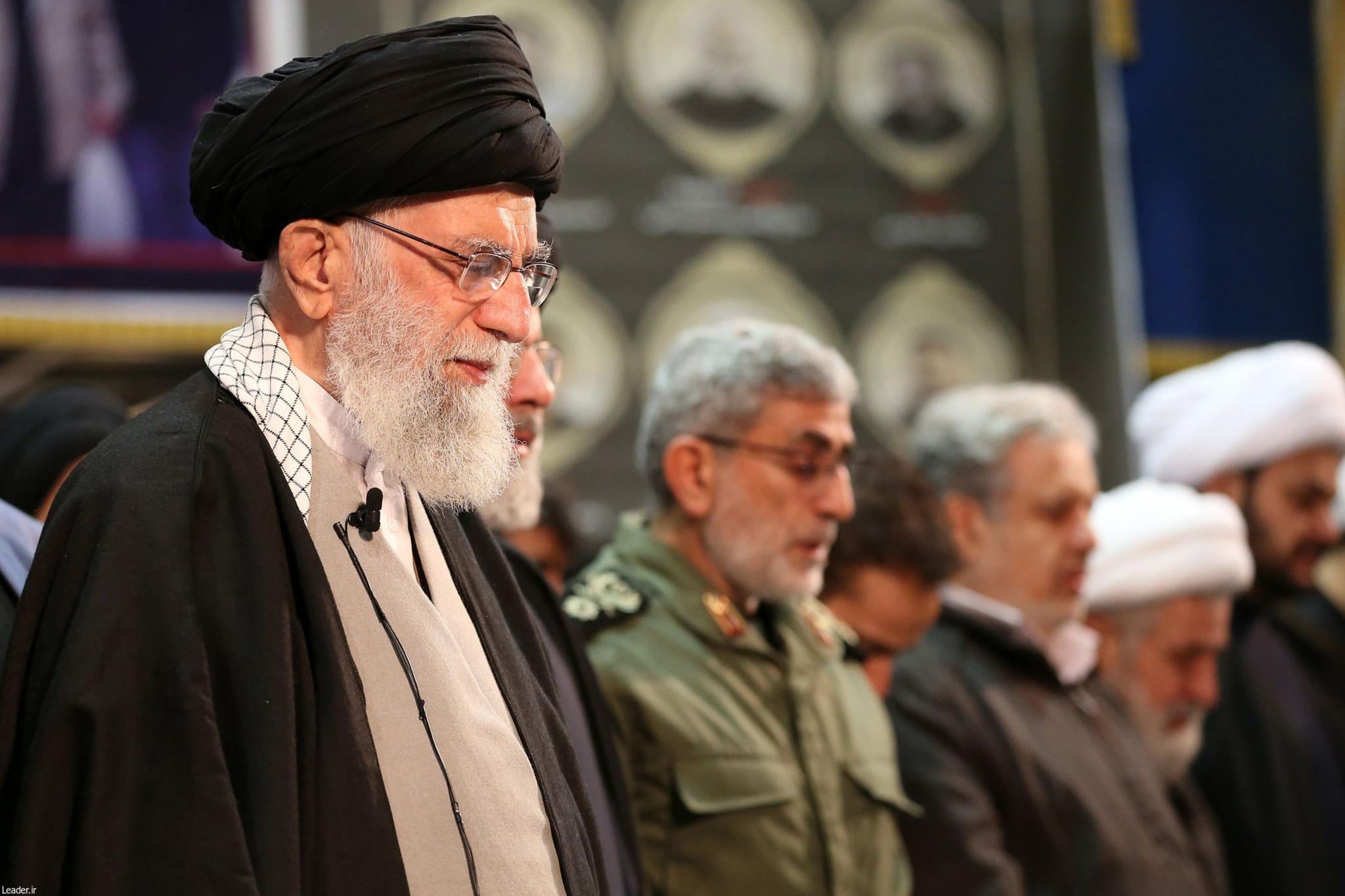
In the decades since his appointment, Imam Khamenei has remained the fixed point in Iran’s political firmament. Governments in Tehran have risen and receded – reformists extending cautious hands toward the West, conservatives warning against the cost of such gestures – yet his role has remained structurally constant. Administrations change. The axis does not.
He functions not merely as a political overseer, but as the ideological anchor of the Republic. In an era defined less by open invasion than by sanctions, sabotage, financial strangulation, and cyberwarfare, his presence has operated as both shield and compass – absorbing pressure while maintaining direction.
The United States-led “maximum pressure” campaign under Donald Trump marked perhaps the most concentrated external attempt to fracture Iran’s internal order since the 1980s. Sanctions hollowed out sectors of the economy. Assassinations targeted strategic figures. Israel carried out covert strikes against nuclear scientists and facilities. The expectation in many Western capitals was not reform, but rupture.
Rupture never came.
When General Haj Qasem Soleimani, commander of the Quds Force and among the most revered military figures in Iran, was assassinated by a United States drone strike in Baghdad in January 2020, observers again anticipated fracture. Grief of that magnitude, they assumed, would expose internal fault lines.
Instead, Imam Khamenei delivered a funeral sermon that transformed mourning into mobilisation. His voice, raspy with emotion yet disciplined in tone, did not summon rash retaliation. It summoned strategic patience and permanent resistance. He reminded the nation that martyrdom, in the Islamic tradition, is not an ending but a transmission.
“They thought by taking one man, they would end the path. They did not realise that this is a path of thousands. This blood will flow through the veins of every free nation that dares to resist tyranny.” (Khamenei’s Qasem Soleimani Funeral Address, 2020.)
The funeral procession, attended by millions, did not fracture the state. It reaffirmed it.
Under his leadership, Iran has endured proxy wars, cyberattacks, disinformation campaigns, and extended economic isolation. Yet it has simultaneously developed drones, satellites, vaccines, and indigenous defence systems. It has launched calibrated retaliatory strikes against Israeli military positions in occupied Palestine and responded to assassinations not with spectacle, but with long term asymmetric strategy. Where others sought provocation, it chose endurance.
Through it all, Khamenei has remained the quiet executor of a philosophy: Iran will not kneel. Not to the United States. Not to Israel. Not to global capital. Sovereignty, in his view, is indivisible.
He is not a leader of media choreography, which is precisely why he unsettles systems built on optics. His authority is not algorithmic, but ideological. In an international order increasingly governed by transient alliances and disposable loyalties, such ideological continuity is perceived not as stability, but as threat.
In much of the Western press, he appears as an abstraction – a grainy image, a selectively translated quotation, a headline stripped of context. Yet across large parts of the Muslim world and the Global South, he represents something less easily caricatured: the persistence of post-colonial defiance in an age that has largely normalised submission.
He is not merely the Supreme Leader of the Islamic Republic. He stands as one of the few remaining statesmen formed in the furnace of anti-colonial revolution who has neither recalibrated his convictions for approval nor exchanged strategic autonomy for comfort. A scholar who never abandoned the pen. A revolutionary who did not dilute resistance into rhetoric.
To empire, such continuity is an obstacle.
To the dispossessed, he is proof that dignity can still outlive power, and that conviction can still outlast the bullet. That there are still men – quiet, wounded, unbending – who choose to be the voice of the silenced rather than the darlings of the elite.
In this age of betrayal, Imam Khamenei remains what few leaders ever become: an idea that refuses to die.
Footnote(s)
¹ While many sources, including the widely known khamenei.ir, list April 19, 1939 as the Gregorian equivalent of Imam Khamenei’s birthdate, this is due to an error in converting the original Islamic birthdate, 28 Safar 1358 AH. Accurate astronomical conversion confirms that the correct Gregorian date is July 17, 1939. The persistence of the April 19 date likely stems from early reliance on imprecise tools or conventional rounding. Crucially, leader.ir, which is his official jurisprudential website, correctly reflects the July 17 conversion.
Unlike khamenei.ir, which functions as a public-facing media outlet focused on speeches, news, and political coverage, leader.ir is managed by the Office of the Supreme Leader and serves as the definitive platform for his religious rulings (istifta’at), doctrinal positions, and formal biographical records. It is regularly used by scholars, seminaries, and jurists for authoritative reference. Its materials are closely vetted and updated with precision, particularly in matters requiring legal accuracy, such as date conversions, religious verdicts, and scholarly attribution. For these reasons, leader.ir holds primacy in scholarly and clerical contexts, even if it remains lesser known to the general public.
References
Biographical and Historical Sources
- Official biography of Imam Sayyid Ali Khamenei. The Office of the Supreme Leader of Iran. www.leader.ir
- Abrahamian, Ervand. A History of Modern Iran. Cambridge University Press, 2008.
- Amanat, Abbas. Iran: A Modern History. Yale University Press, 2017.
- Dabashi, Hamid. Theology of Discontent: The Ideological Foundations of the Islamic Revolution in Iran. Transaction Publishers, 2006.
- Wilfried Buchta. Who Rules Iran? The Structure of Power in the Islamic Republic. The Washington Institute for Near East Policy, 2000.
Political Roles and Institutional Power
- Constitution of the Islamic Republic of Iran (as amended in 1989), particularly Articles 5, 107–112.
- Assembly of Experts transcripts (1989 leadership session), partial Persian transcripts available through IRNA archives.
- Katzman, Kenneth. Iran’s Foreign and Defense Policies. Congressional Research Service, multiple editions (2000–2022).
Military and Strategic Influence
- Sadjadpour, Karim. “Reading Khamenei: The World View of Iran’s Most Powerful Leader.” Carnegie Endowment for International Peace, 2008.
- International Crisis Group. Iran’s Networks of Influence in the Middle East, 2019.
- Al-Mayadeen English. “Ayatollah Khamenei: Palestine is the Cause of Humanity.” Quds Day speeches, multiple years.
- Al-Manar News. “Sayyed Hassan Nasrallah: Our weapons and resistance exist thanks to the Islamic Republic.”
Philosophy, Culture, and Literary Life
- Khamenei, Ali. Future Outlook of the Islamic World (آینده جهان اسلام), Islamic Culture and Relations Organization, 1990s.
- “An Interview with Golpayegani on the Leader’s Literary Taste.” Khamenei.ir Cultural Archive, 2020.
- Khamenei’s selected poetry and essays. Compilations available in Persian via Nashr-e Sayyid al-Shuhada Publications.
Recent Events and Public Messaging
- Funeral sermon for General Qasem Soleimani. Full text and video. www.khamenei.ir(Jan 2020).
- Press TV. “Leader: Soleimani’s assassination will not go unanswered.” Jan 3, 2020.
- Al Jazeera English (archival): “Iran retaliates after US strike kills Qasem Soleimani,” Jan 2020.
- FAIR.org. “How US Media Erased the ‘Maximum Pressure’ Campaign Against Iran.” 2021.
Western Media Framing and Critique
- Edward Said. Covering Islam: How the Media and the Experts Determine How We See the Rest of the World. Pantheon Books, 1981.
- Herman, Edward S., and Noam Chomsky. Manufacturing Consent: The Political Economy of the Mass Media. Pantheon, 1988.
- Mondoweiss. “How the Western press consistently dehumanises Iran’s leadership.” Analysis articles, 2020–2023.
No Comment! Be the first one.