




Jabal ʿAmil: Lebanon’s Forgotten Cradle of Shiʿi Scholarship
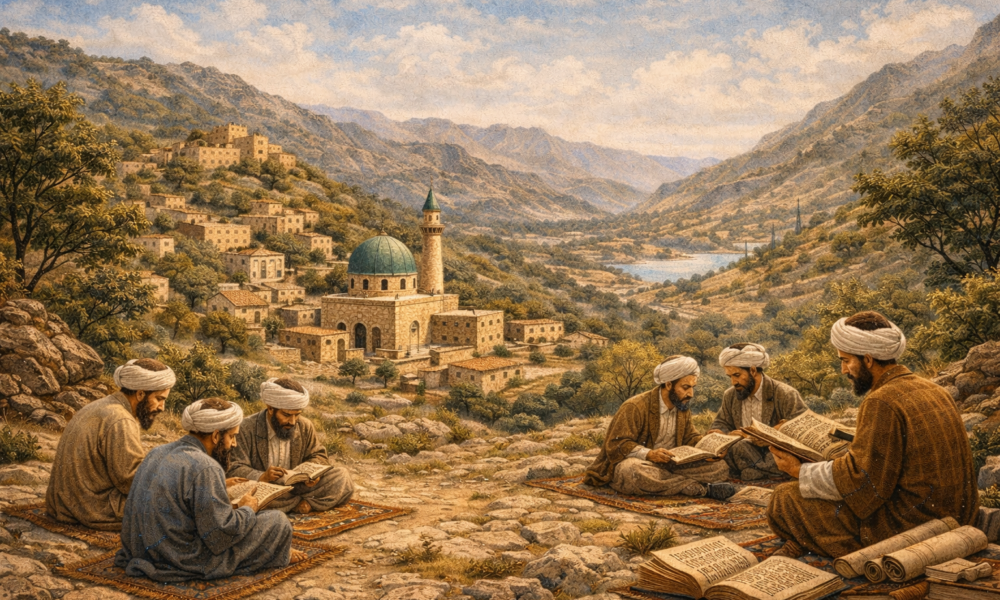
Across the rugged terrain of southern Lebanon, knowledge once moved quietly between villages whose names rarely appeared in imperial chronicles. In modest homes, mosques, and small circles of learning, generations of scholars devoted their lives to the study of Qur’an, law, theology and transmitted traditions. The intellectual labour carried out in these towns would eventually travel far beyond the region itself. Manuscripts written in the villages of Jabal ʿAmil found their way into the great seminaries of Najaf and Karbala, later reaching the scholarly centres of Safavid Iran, where they continued to shape the curriculum of Shiʿi learning.
What emerged from this landscape was not an isolated scholarly effort, but a sustained intellectual culture that endured for centuries. Families produced successive generations of jurists, teachers and hadith scholars, forming networks of transmission that connected rural Lebanon to the wider intellectual world of Islam. Through these networks, the region became one of the most productive centres of Twelver Shiʿi scholarship in the medieval period, despite its modest size and limited political influence.
The scholars of Jabal ʿAmil were rarely protected by courts or imperial patronage. Many lived under political authorities who regarded their sectarian affiliation with suspicion, and at times hostility. Yet it was precisely within these constraints that a distinctive scholarly tradition took shape. Rather than relying on royal institutions, learning was sustained through local initiative, familial transmission and the resilience of communities committed to preserving the intellectual legacy of the Ahl al-Bayt.
Over time, this mountainous region produced a remarkable number of jurists, theologians and scholars whose writings would come to occupy a central place within Shiʿi intellectual history. Some of them would eventually migrate to other parts of the Islamic world, carrying with them the traditions cultivated in Jabal ʿAmil. Others would remain in their homeland, continuing to teach and write under conditions that were often far from stable. Together, they formed a scholarly lineage whose influence extended far beyond the narrow valleys in which it began.
The story of this intellectual tradition is rarely told in modern historical narratives. Discussions of Shiʿi scholarship often focus on the great centres of Iraq or Iran, where seminaries developed under more visible political circumstances. Yet long before those centres rose to prominence, the villages of southern Lebanon were already producing scholars whose works would leave a lasting imprint on the study of Islamic law and theology.
To understand the intellectual history of Shiʿism in its full breadth, the scholarly legacy of Jabal ʿAmil must therefore be brought back into view.
Early Roots of Shiʿi Allegiance in the Levant
The emergence of a distinct Shiʿi scholarly tradition in southern Lebanon did not occur in isolation from the wider religious history of the Levant. Long before Jabal ʿAmil developed into a recognised centre of juristic learning, the region had already been part of a broader landscape in which loyalties to the household of the Prophet were remembered and preserved. Shiʿi historical literature frequently traces the earliest seeds of this allegiance to the presence of the Companion Abu Dharr al-Ghifari in al-Sham during the formative decades of the Islamic period. Abu Dharr occupies a singular place in Islamic memory as a figure of uncompromising moral conviction. Known for his outspoken denunciation of wealth accumulation among the ruling elite, he became one of the earliest voices to challenge the emerging political order under the Umayyads. Classical sources across several traditions describe his conflict with Muʿawiya ibn Abi Sufyan in Syria and his refusal to soften his criticism of social injustice, a stance that ultimately led to his exile.
Within Shiʿi historiography, Abu Dharr’s time in the Levant acquired a symbolic significance that extended beyond the details of his political dispute. His well-known loyalty to Imam Ali and his public defence of the rights of the Ahl al-Bayt allowed later generations to remember him as one of the earliest transmitters of devotion to the Prophet’s family in the region. Traditions preserved in Shiʿi historical writing recount that Abu Dharr’s preaching and moral authority left a lasting impression among communities in parts of the Levant, particularly in areas that would later become associated with Shiʿi populations. While such accounts should be approached as expressions of historical memory rather than precise demographic evidence, they nevertheless illustrate how the early centuries of Islamic history were interpreted by later scholars seeking to explain the origins of Shiʿi presence in the region.
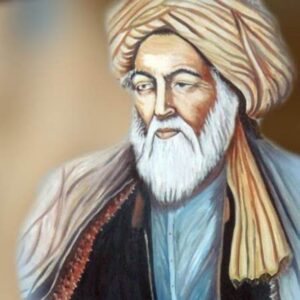
More concrete evidence of Shiʿi communities in the Levant appears in the medieval period. By the eleventh century, travellers and geographers were already documenting religious diversity across the coastal cities and mountainous districts of the region. Among the most notable accounts is that of the Persian traveller Nasir Khusraw, whose journey through the eastern Mediterranean in the mid-eleventh century produced one of the most detailed travel narratives of the period. In his Safarnameh, Nasir Khusraw describes the city of Tyre as a prosperous port whose population included a strong Twelver Shiʿi community. His observations provide an important snapshot of the religious landscape of the Levant during the Fatimid era, indicating that Shiʿi communities had already established themselves in certain coastal and inland areas.
Beyond Tyre, other districts of what is now Lebanon gradually emerged as centres of Shiʿi settlement. The mountainous territory that would later be known as Jabal ʿAmil became one such region, as did parts of the Biqāʿ Valley around Baalbek. The relative autonomy afforded by mountainous terrain often allowed minority religious communities to survive in areas where imperial authority was uneven or indirect. Over time, these regions developed stable local populations whose religious orientation differed from the dominant Sunni institutions that prevailed in most major urban centres of the Levant.
It was within this environment that the foundations for a later intellectual tradition were laid. The Shiʿi communities of southern Lebanon were not yet the organised centres of scholarship that they would become in subsequent centuries. Nevertheless, the persistence of these communities provided the social basis from which later scholarly institutions would emerge. The transformation of Jabal ʿAmil from a peripheral mountain district into one of the most productive centres of Twelver Shiʿi learning would only occur later, as networks of scholars began to connect the region to the broader intellectual currents of the Islamic world.
Jabal ʿAmil: A Frontier of Scholarship
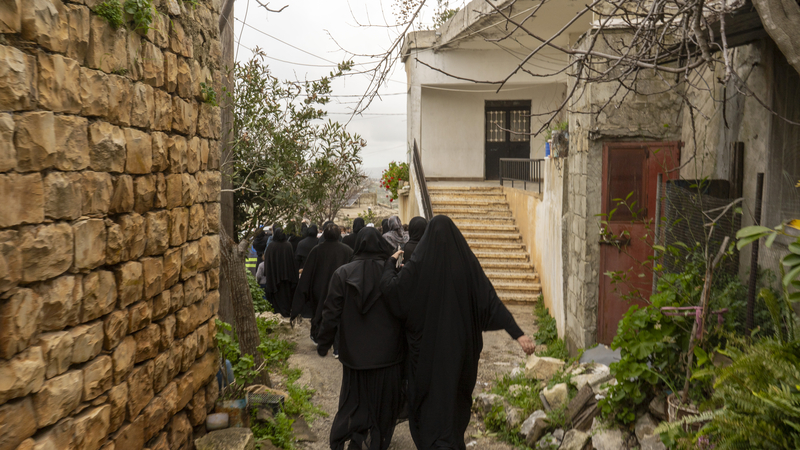
Stretching across the hills and valleys south of the Litani River, the region historically known as Jabal ʿAmil occupies a rugged landscape between the Mediterranean coast and the interior of the Levant. Its towns and villages developed across a chain of mountainous terrain that historically limited direct administrative control from distant imperial capitals. For much of the medieval and early modern periods, this geography produced a distinctive social environment. Political authority in the region was often indirect, mediated through local notables, tribal arrangements, or shifting provincial structures within larger empires. While such conditions sometimes exposed local communities to instability, they also allowed pockets of religious and intellectual life to develop with a degree of autonomy that was less common in the more tightly governed urban centres of the Levant.
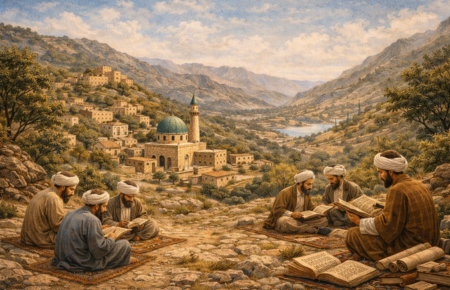
It was within this setting that Jabal ʿAmil gradually became known as one of the most active centres of Twelver Shiʿi scholarship. Unlike the great urban institutions of Baghdad, Damascus, or Cairo, the scholarly culture that emerged here was largely decentralised. Learning took place not in grand academies but within village mosques, private libraries, and modest circles of instruction maintained by local scholars. These spaces functioned as small seminaries in which students studied the core Islamic sciences, particularly jurisprudence, hadith transmission, Qur’anic exegesis, and theology. Over time, clusters of villages became recognised as centres of learning, each associated with scholars who taught successive generations of students.
A defining feature of this intellectual culture was the role of family lineages in sustaining scholarship across generations. In many cases, the transmission of knowledge passed through families whose members served as teachers, jurists, and authors over extended periods. These scholarly households maintained manuscripts, preserved chains of transmission, and cultivated networks of students who would later travel to other centres of learning in Iraq, Iran, and beyond. Through these familial and scholarly connections, the intellectual life of Jabal ʿAmil became woven into the broader scholarly geography of the Shiʿi world.
Despite the modest size of the region, the number of scholars it produced over the centuries was striking. Biographical works written by later Shiʿi scholars repeatedly note the unusually high concentration of jurists and theologians emerging from Jabal ʿAmil. One of the most significant of these works, compiled in the seventeenth century by the scholar al-Hurr al-ʿAmili, documented hundreds of scholars originating from the region. His biographical dictionary preserved the memory of generations of jurists whose writings and teaching had shaped the development of Shiʿi jurisprudence.
Later Shiʿi historiographical traditions would sometimes emphasise this phenomenon in striking terms. Some accounts suggested that as many as one fifth of the recognised scholars of Twelver Shiʿism originated from Jabal ʿAmil. While such statements should be understood as expressions of internal scholarly pride rather than precise statistical calculations, they nevertheless reflect the remarkable intellectual output associated with this small mountainous region.
By the later medieval period, the reputation of Jabal ʿAmil had become firmly established within Shiʿi scholarly networks. Students from the region travelled to major centres of learning such as al-Hilla in Iraq, where they studied under leading jurists before returning to Lebanon to teach and write. Others carried the intellectual traditions of Jabal ʿAmil to distant courts and seminaries. In this way, a region that remained geographically peripheral gradually became intellectually central to the development of Twelver Shiʿi thought.
The School of Jezzine and the Rise of Juristic Authority
By the fourteenth century, the scholarly culture of Jabal ʿAmil had begun to produce figures whose influence would extend far beyond the region itself. Among the most consequential of these scholars was Muhammad ibn Makki al-ʿAmili, later known in Shiʿi intellectual history as al-Shahid al-Awwal, the First Martyr. Born in the town of Jezzine in southern Lebanon in 1334 CE (734 AH), Ibn Makki emerged from the scholarly environment that had taken root in the villages of Jabal ʿAmil. From an early stage in his education, he demonstrated an aptitude for the Islamic sciences that would eventually place him among the most influential jurists of his generation.
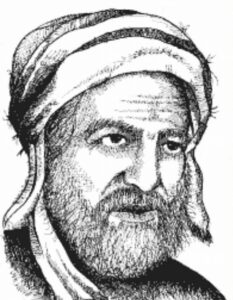
Like many scholars from the region, Ibn Makki’s intellectual formation was shaped through travel. He journeyed to the city of al-Ḥilla in Iraq, which by that period had become one of the most important centres of Twelver Shiʿi scholarship. The intellectual tradition of al-Ḥilla had been shaped by earlier jurists such as al-ʿAllāma al-Ḥillī and his predecessors, whose works had refined Shiʿi legal theory and helped consolidate the foundations of Imami jurisprudence. In this environment, Ibn Makki studied under leading scholars and immersed himself in the legal and theological debates that animated the Shiʿi scholarly world of the time. His studies also extended beyond the Shiʿi tradition alone. Like many jurists of the medieval period, he engaged deeply with Sunni legal literature and became familiar with the methodologies of several Sunni schools of law, a practice that broadened his intellectual horizon and strengthened his reputation as a jurist.
After completing his studies, Ibn Makki returned to Jabal ʿAmil, where he began teaching and writing. It was during this period that Jezzine developed into one of the most important centres of Shiʿi learning in the Levant. Students travelled to study under him, and the scholarly networks linking southern Lebanon with Iraq and other regions of the Islamic world grew stronger. Through teaching, writing, and correspondence with scholars in other centres, Ibn Makki played a crucial role in elevating the scholarly reputation of Jabal ʿAmil within the wider Shiʿi intellectual landscape.
His most famous work, Al-Lumaʿa al-Dimashqiyya (The Damascene Gloss), would become one of the most enduring texts of Shiʿi jurisprudence. According to traditional accounts preserved in Shiʿi biographical literature, Ibn Makki composed the work during a period of imprisonment in Damascus. The text itself is a concise yet systematic exposition of Shiʿi legal rulings across the principal chapters of jurisprudence. Despite its relatively compact format, the work demonstrated a remarkable clarity of organisation and legal reasoning. In later centuries, it would become one of the central teaching manuals in Shiʿi seminaries, studied by generations of students seeking to master the principles of Imami fiqh.
Yet Ibn Makki’s life unfolded within a political environment that was often hostile to Shiʿi scholars. During the late fourteenth century, the Levant formed part of the Mamluk Sultanate, whose religious establishment was firmly aligned with Sunni orthodoxy. Although Shiʿi communities existed across parts of the region, their scholars operated under conditions that could at times become precarious. Ibn Makki’s growing reputation as a jurist eventually drew the attention of authorities in Damascus, where accusations of heresy were brought against him. The charges reflected not only theological disagreements but also the broader sectarian tensions that characterised the period.
In 1385 CE (786 AH), Ibn Makki was executed in Damascus following a legal process conducted by Mamluk authorities. His death profoundly shaped how later generations remembered him. Within Shiʿi scholarly tradition, he came to be known as al-Shahid al-Awwal, the First Martyr, a title that acknowledged both his scholarly stature and the circumstances of his death. His execution was understood not merely as a personal tragedy but as part of a longer pattern in which scholars committed to the teachings of the Ahl al-Bayt often faced persecution from political authorities.
Despite the attempt to silence him, the intellectual legacy of Ibn Makki endured through the very works he left behind. His writings continued to circulate among scholars across the Shiʿi world, and the teaching networks he helped establish in Jabal ʿAmil would produce further generations of jurists who built upon his contributions. In this way, the life of al-Shahid al-Awwal came to symbolise a powerful convergence of scholarship, conviction, and sacrifice within the history of Shiʿi thought.
The Second Martyr and the Expansion of Shiʿi Legal Thought
Nearly two centuries after the death of al-Shahid al-Awwal, another scholar from Jabal ʿAmil would rise to prominence and further solidify the region’s reputation within the Shiʿi intellectual world. This was Zayn al-Din ibn ʿAli al-Jubaʿi al-ʿAmili, remembered in Shiʿi history as al-Shahid al-Thani, the Second Martyr. Born in Jbaa, one of the villages of Jabal ʿAmil that had already become associated with scholarly activity, Zayn al-Din grew up within the same intellectual environment that had produced earlier generations of jurists. From the outset of his education, he was exposed to a scholarly culture in which the study of law, hadith, theology, and Qur’anic sciences formed the foundation of religious learning.
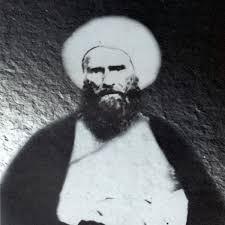
Like many scholars of his era, Zayn al-Din’s intellectual formation required extensive travel. He studied not only within the Levant but also in other major centres of learning across the Islamic world. Historical accounts describe his journeys to Damascus, Cairo, Jerusalem, and other centres of scholarship, where he sought instruction from prominent teachers representing a wide range of intellectual traditions. During these travels he immersed himself in the study of both Shiʿi and Sunni legal scholarship, mastering the methodologies of multiple Sunni schools of law alongside the jurisprudential tradition of the Imami school. This breadth of study was not unusual among leading jurists of the period, many of whom considered familiarity with the legal reasoning of different schools to be essential for developing rigorous arguments within their own tradition.
Upon returning to Jabal ʿAmil, Zayn al-Din began teaching and writing, contributing to the growing scholarly reputation of the region. His works reflected both the depth of his legal training and his commitment to refining the juristic legacy inherited from earlier scholars. Among his many writings, the most influential was Al-Rawda al-Bahiyya fi Sharḥ al-Lumʿa al-Dimashqiyya (The Radiant Garden: A Commentary on the Damascene Gloss). In this work, Zayn al-Din produced a detailed commentary on the legal text composed two centuries earlier by al-Shahid al-Awwal. The commentary did more than simply explain the earlier work; it expanded upon its arguments, clarified complex legal questions, and integrated additional discussions drawn from the broader corpus of Shiʿi jurisprudence.
Over time, this commentary became one of the most widely studied works in the curriculum of Shiʿi seminaries. Students in the hawza system would study Al-Lumʿa al-Dimashqiyya alongside Al-Rawda al-Bahiyya, moving between the original text and its commentary in order to understand the structure of Shiʿi legal reasoning. Through this pairing of texts, the intellectual relationship between the First and Second Martyrs became embedded within the educational tradition of the Shiʿi scholarly world. Even centuries later, both works remain part of the core curriculum in many seminaries, continuing to shape how students engage with the principles of Imami jurisprudence.
Yet the life of Zayn al-Din unfolded under political circumstances that, much like those faced by his predecessor, were fraught with sectarian tension. During the sixteenth century, the Levant had come under the rule of the Ottoman Empire, whose religious institutions were closely aligned with Sunni orthodoxy. Although Shiʿi communities continued to exist in regions such as Jabal ʿAmil, their scholars often operated under scrutiny from local authorities. Zayn al-Din’s reputation as a prominent jurist eventually attracted attention beyond the confines of his scholarly circle.
In 1558 CE (965 AH), while travelling toward Istanbul after being summoned by Ottoman officials, Zayn al-Din was arrested. Accounts preserved in Shiʿi biographical literature describe how accusations were brought against him during this journey, leading to his execution before he could reach the imperial capital. The circumstances surrounding his death remain a subject of historical discussion, but within Shiʿi scholarly tradition he was remembered as al-Shahid al-Thani, the Second Martyr, a title that linked his fate to that of al-Shahid al-Awwal before him.
The deaths of both scholars came to symbolise a recurring theme within the intellectual history of Jabal ʿAmil. The region had produced jurists whose scholarship commanded respect across the Islamic world, yet the political environments in which they lived often exposed them to suspicion and persecution. For later generations of scholars, the lives of the two martyrs represented more than individual biographies; they illustrated the intertwined relationship between learning, conviction, and endurance that characterised the scholarly tradition of southern Lebanon.
Shaykh al-Bahaʾi and the Migration of Knowledge
The intellectual influence of Jabal ʿAmil did not remain confined to the villages and towns of southern Lebanon. By the sixteenth century, the scholarly networks that had formed in the region began to extend more visibly across the broader Islamic world. One of the most prominent figures to emerge from this tradition was Baha al-Din Muhammad ibn Husayn al-ʿAmili, widely known as Shaykh al-Bahaʾi. Born in Baalbek in 1547 CE (953 AH) into a distinguished family of scholars from Jabal ʿAmil, Shaykh al-Bahāʾi grew up within an intellectual lineage that had long been connected to the juristic and scholarly life of the region.
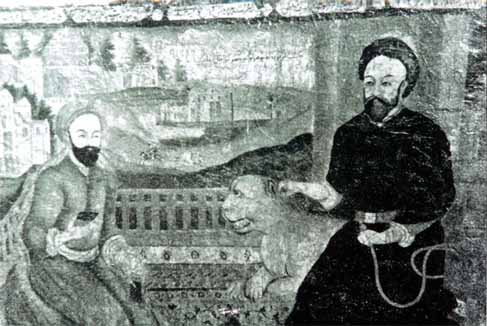
His father, Husayn ibn ʿAbd al-Samad al-ʿAmili, was himself a respected scholar who had been trained within the scholarly networks of Jabal ʿAmil. During the sixteenth century, however, political developments across the Middle East created new opportunities and pressures for scholars from the region. The rise of the Safavid dynasty in Iran, which formally adopted Twelver Shiʿism as the state religion in the early sixteenth century, generated a demand for jurists and scholars capable of establishing the religious institutions of the new Shiʿi state. At the same time, many Shiʿi scholars in Ottoman-controlled territories continued to face varying degrees of suspicion or constraint. Within this broader context, a number of scholars from Jabal ʿAmil chose to migrate eastward.
Shaykh al-Bahaʾi’s family was among those who relocated to Safavid Iran, where his father took up scholarly positions within the emerging Shiʿi institutions of the Safavid state. The young Baha al-Din grew up in this environment, receiving an education that combined the traditions of Jabal ʿAmil with the expanding intellectual life of Safavid Iran. Over time, he distinguished himself not only as a jurist but also as one of the most versatile scholars of his era.
Unlike many jurists whose work remained confined primarily to legal scholarship, Shaykh al-Bahaʾi cultivated expertise across a remarkably wide range of disciplines. His writings addressed jurisprudence, theology, philosophy, mathematics, astronomy, literature, and architecture, reflecting the broader intellectual culture of the early modern Islamic world, in which scholars often moved fluidly between the transmitted sciences (ʿulūm naqliyya) and the rational sciences (ʿulūm ʿaqliyya). In jurisprudence, he produced works that contributed to the development of Shiʿi legal thought, while in the rational sciences he engaged with subjects such as geometry, astronomical calculations, and philosophical enquiry.
Shaykh al-Bahaʾi eventually rose to become one of the leading scholars of Isfahan, which had been established by the Safavids as their imperial capital and was rapidly developing into one of the most vibrant intellectual centres of the Islamic world. Historical accounts associate him not only with scholarly teaching but also with the cultural and architectural life of the Safavid capital. Several structures and urban projects in Isfahan have traditionally been attributed to his influence, reflecting the unusual breadth of his scholarly and practical interests.
His career illustrates a broader historical phenomenon that profoundly shaped the intellectual trajectory of Twelver Shiʿism in the early modern period. The migration of scholars from Jabal ʿAmil to Safavid Iran played a significant role in the institutional development of Shiʿi scholarship within the Safavid state. Many of these scholars brought with them the juristic traditions cultivated in the villages of southern Lebanon, as well as the pedagogical methods that had sustained Shiʿi learning in regions where it had long existed as a minority tradition. Within the Safavid realm, these scholars helped establish seminaries, train students, and consolidate the legal and theological foundations of Twelver Shiʿism as a state-supported religious system.
The influence of these migrations extended far beyond the Safavid period itself. The scholarly institutions that developed in Iran during the sixteenth and seventeenth centuries would later contribute to the emergence of the hawza tradition associated with cities such as Isfahan, Qom, and eventually Najaf. Through the movement of scholars like Shaykh al-Bahaʾi and his contemporaries, the intellectual legacy of Jabal ʿAmil became embedded within the wider scholarly networks of the Shiʿi world.
In this way, the career of Shaykh al-Bahaʾi illustrates how the scholarly traditions cultivated in a relatively small region of southern Lebanon came to influence the development of Shiʿi intellectual life across an entire empire. The migration of knowledge from Jabal ʿAmil did not diminish the region’s significance; rather, it extended its influence, allowing its scholarly heritage to shape institutions and traditions far beyond its mountainous homeland.
Al-Hurr al-ʿAmili and the Memory of a Scholarly Civilisation
By the seventeenth century, the intellectual legacy of Jabal ʿAmil had become so extensive that scholars themselves began to recognise the need to document it.
Among those who undertook this task was Muhammad ibn al-Hasan al-Hurr al-ʿAmili (1624–1693), one of the most influential scholars of the later Safavid period. Born in the village of Mashghara in the Biqāʿ region, which historically formed part of the wider intellectual orbit of Jabal ʿAmil, al-Hurr al-ʿAmili grew up within a scholarly environment shaped by generations of jurists and teachers. Like many scholars from the region before him, he eventually migrated eastward to the centres of learning that had developed in Safavid Iran, where he continued his studies and later assumed important scholarly positions.
Al-Hurr al-ʿAmili is best known for his monumental hadith collection Wasāʾil al-Shīʿa ilā Taḥṣīl Masāʾil al-Sharīʿa, one of the most comprehensive compilations of legal traditions within Twelver Shiʿism. Drawing upon earlier canonical collections of Imami hadith, the work organised thousands of narrations related to jurisprudential questions, arranging them systematically according to the chapters of Islamic law. Over time, Wasāʾil al-Shīʿa became an indispensable reference for jurists seeking textual evidence for legal rulings. Even today it remains one of the central hadith sources used by Shiʿi scholars in the study of fiqh.
Yet alongside this monumental legal compilation, al-Hurr al-ʿAmili produced another work whose significance lies not in jurisprudence but in historical memory. His biographical dictionary Amal al-Āmil fī ʿUlamāʾ Jabal ʿĀmil was written as an effort to preserve the intellectual heritage of the region from which he himself had emerged. At a time when many scholars of Jabal ʿAmil had dispersed across the Islamic world, al-Hurr al-ʿAmili sought to record the lives and works of those who had shaped the scholarly tradition of the region over several centuries.
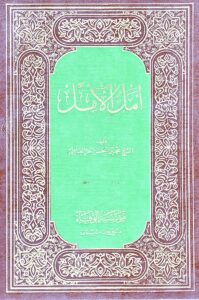
The resulting work documented more than two hundred scholars associated with Jabal ʿAmil, beginning with early figures connected to the formative centuries of Shiʿi learning and extending into the author’s own era. Each entry in the biographical dictionary recorded details about a scholar’s teachers, students, writings, and intellectual contributions. In doing so, the work preserved not only individual biographies but also the chains of learning that connected generations of scholars to one another. Through these interwoven networks of teachers and students, the intellectual life of Jabal ʿAmil could be traced across centuries.
The importance of Amal al-Āmil lies precisely in this preservation of continuity.
Without such documentation, the contributions of many scholars from Jabal ʿAmil might have faded into obscurity, scattered across manuscripts and regional traditions. Instead, al-Hurr al-ʿAmili created a record that allowed later generations to recognise the remarkable concentration of scholarship that had emerged from this small mountainous region. His work effectively transformed the memory of Jabal ʿAmil into a documented scholarly lineage, linking jurists, theologians and teachers across time.
In this sense, Amal al-Āmil functions not merely as a collection of biographies but as an archive of an entire intellectual civilisation. It demonstrates that the scholarly culture of Jabal ʿAmil was not the product of isolated individuals, but rather the outcome of a sustained tradition of learning transmitted across generations. Through the careful recording of this lineage, al-Hurr al-ʿAmili ensured that the intellectual history of southern Lebanon would remain visible within the broader narrative of Shiʿi scholarship.
Why Jabal ʿAmil Matters
When the intellectual history of Twelver Shiʿism is discussed today, attention often gravitates toward the great centres of learning that came to dominate the later development of Shiʿi scholarship. Cities such as Najaf, Karbala, Qom and Isfahan are widely recognised as major hubs of juristic and theological study. While these centres undoubtedly played decisive roles in shaping the institutional life of Shiʿi seminaries, focusing exclusively on them risks obscuring the more complex geographical foundations upon which this intellectual tradition was built.
The history of Jabal ʿAmil reveals that the preservation and development of Shiʿi scholarship did not occur solely within large urban institutions supported by powerful states. Instead, smaller regions operating on the margins of imperial authority often played a crucial role in safeguarding and transmitting knowledge. The scholarly culture of southern Lebanon demonstrates how intellectual traditions can flourish even in places that lack the political prominence of imperial capitals.
Several factors help explain the remarkable scholarly output associated with Jabal ʿAmil. One of the most important was the presence of strong scholarly families whose members dedicated themselves to the study and teaching of Islamic sciences across multiple generations. These lineages created continuity within the region’s intellectual life, ensuring that knowledge was preserved, manuscripts were transmitted, and students were trained even in the absence of large institutional structures.
Equally significant were the local institutions of learning that developed across the villages of the region. Although modest in scale, the mosques, study circles, and small seminaries of Jabal ʿAmil provided spaces where students could pursue advanced study in jurisprudence, hadith, theology and related disciplines. These centres did not function in isolation; rather, they formed part of a wider network of scholarly exchange that connected the region to the broader intellectual world of Islam.
Perhaps the most consequential factor was the mobility of scholars themselves. Students and teachers from Jabal ʿAmil frequently travelled to other centres of learning, studying in places such as al-Ḥilla, Damascus and Cairo before returning to Lebanon to teach. Others migrated permanently, carrying with them the intellectual traditions cultivated in their homeland. Through these movements, the scholarly culture of Jabal ʿAmil became integrated into the wider networks of Shiʿi learning that stretched from the Levant to Iraq and Iran.
The result was a form of intellectual influence that far exceeded the geographical scale of the region itself. Scholars originating from the villages of southern Lebanon contributed to the development of jurisprudence, hadith scholarship, and theological debate across the Shiʿi world. Their writings entered the curricula of seminaries far beyond Lebanon, shaping the education of students in institutions that would later become the major centres of Shiʿi learning.
Seen in this broader perspective, Jabal ʿAmil represents more than a regional chapter in the history of Shiʿi scholarship. It illustrates how intellectual traditions are sustained not only by imperial institutions but also by communities that remain committed to preserving knowledge across generations. Through its scholars, its networks of learning, and its enduring intellectual legacy, this mountainous region played a role in the development of Shiʿi thought that continues to resonate across the scholarly world today.
From Jabal ʿAmil to Safavid Iran: The Migration of Scholars
One of the most consequential developments in the intellectual history of Jabal ʿAmil occurred during the sixteenth century, when political transformations across the Middle East created new opportunities for Shiʿi scholars beyond the Levant. With the rise of the Safavid dynasty in Iran and its adoption of Twelver Shiʿism as the official religion of the state, the Safavid court faced an immediate challenge: the institutional infrastructure necessary to sustain a Shiʿi religious establishment did not yet exist in many parts of the empire. Jurists trained in the traditions of Imami law were therefore needed to establish seminaries, teach jurisprudence and organise religious administration.
Scholars from Jabal ʿAmil were uniquely positioned to fill this role. Having preserved and developed Shiʿi scholarship in regions where it existed as a minority tradition, they possessed both the juristic training and the pedagogical experience required to build new institutions. As a result, a significant number of scholars from southern Lebanon migrated eastward during the Safavid period, taking up positions in cities such as Isfahan, Qazvin and Mashhad. Figures like Shaykh al-Bahāʾi were among the most prominent representatives of this movement, but they were far from alone.
This migration played a crucial role in shaping the early intellectual foundations of Safavid Shiʿism. The legal traditions cultivated in the villages of Jabal ʿAmil were transmitted into the institutions of the Safavid state, where they contributed to the consolidation of Twelver Shiʿi jurisprudence within the imperial religious structure. In this sense, the intellectual heritage of southern Lebanon became woven into the development of Shiʿi scholarship across Iran, demonstrating how a regional scholarly tradition could exert influence on a far larger political stage.
Jabal ʿAmil in the Ottoman Era
The migration of scholars from Jabal ʿAmil to Safavid Iran cannot be understood without considering the political environment of the Levant during the same period. By the early sixteenth century, the region had come under the rule of the Ottoman Empire, whose religious institutions were firmly aligned with Sunni orthodoxy. Although Shiʿi communities continued to exist across parts of Lebanon and Syria, their scholars often operated within a political framework that could become hostile to expressions of Shiʿi identity.
The execution of scholars such as al-Shahid al-Awwal and al-Shahid al-Thani, remembered within Shiʿi tradition as the First and Second Martyrs, reflected these tensions. While the precise circumstances of their deaths involved complex legal and political dynamics, their executions became emblematic of the vulnerabilities faced by Shiʿi scholars in regions where their communities lacked political protection.
Within this environment, migration offered both safety and opportunity. Scholars who travelled eastward to Safavid Iran found themselves within a political system that actively supported the development of Twelver Shiʿi institutions. Others remained in Lebanon, continuing to teach and write despite the challenges posed by the political order of the time. Together, these two trajectories ensured that the intellectual tradition of Jabal ʿAmil would survive both within the region itself and within the expanding scholarly networks of the wider Shiʿi world.
The Modern Continuation of the Jabal ʿAmil Tradition
Although the classical era of Jabal ʿAmil scholarship is often associated with the medieval and early modern periods, the intellectual legacy of the region did not end with those centuries. In the modern era, southern Lebanon has continued to produce scholars and thinkers whose influence extends far beyond the boundaries of the country itself.
Among the most significant figures of the twentieth century was Imam Musa al-Sadr, whose arrival in Lebanon in the late 1950s marked the beginning of a new phase in the political and intellectual life of the Lebanese Shiʿi community. Drawing upon the scholarly heritage of the Shiʿi world while responding to the social realities of modern Lebanon, he worked to revitalise religious institutions, promote social development and articulate a vision of communal dignity rooted in Islamic thought.

Another influential figure was Sayyid Muhammad Husayn Fadlallah, one of the most prominent contemporary Shiʿi scholars to emerge from Lebanon. Educated in the seminaries of Najaf, Fadlallah combined classical religious training with engagement in contemporary intellectual and social debates. His writings and teachings reached audiences far beyond Lebanon, reflecting the continued ability of scholars from the region to participate in shaping the wider discourse of Shiʿi thought.

These modern figures illustrate that the scholarly tradition of Jabal ʿAmil is not merely a historical phenomenon confined to the past. Rather, it represents a living intellectual lineage that has continued to adapt to new political, social and intellectual contexts while remaining rooted in the traditions cultivated by earlier generations of scholars.
The Legacy of a Forgotten Intellectual Frontier
The history of Jabal ʿAmil reveals that the endurance of Shiʿi intellectual life did not depend solely on imperial capitals or powerful institutions. Long before major seminaries emerged under state patronage, communities in regions like southern Lebanon had already developed traditions of learning capable of sustaining scholarship across generations. Within villages that rarely appeared in the political histories of empires, scholars devoted their lives to the study of law, hadith, theology and philosophy, producing works that would circulate far beyond the narrow valleys in which they were written.
The significance of this legacy lies not only in the number of scholars the region produced, but in the continuity of the intellectual networks that sustained them. Through familial lineages, local centres of learning and the movement of students across the Islamic world, the scholarly culture of Jabal ʿAmil became integrated into a much wider landscape of Shiʿi thought. Jurists trained in its villages helped refine legal traditions, preserve the transmission of hadith, and contribute to the scholarly debates that shaped the development of Imami jurisprudence. Their writings eventually found their way into seminaries across Iraq and Iran, where they remain part of the intellectual inheritance of the Shiʿi world.
Seen from a broader historical perspective, the story of Jabal ʿAmil challenges the assumption that intellectual authority emerges only from large political centres. The preservation of knowledge often depends instead on smaller communities that maintain traditions of learning despite limited resources and uncertain political conditions. In the case of southern Lebanon, these communities succeeded in cultivating a scholarly culture whose influence would extend far beyond its geographic origins.
Today, the towns and villages of Jabal ʿAmil appear as modest points on the map of the eastern Mediterranean. Yet within the intellectual history of Shiʿi Islam, they occupy a far larger space. For centuries, this mountainous region served as a frontier of scholarship where jurists, theologians and scholars contributed to the preservation and development of a tradition that continues to shape the study of Islamic law and theology across the Shiʿi world.
References
Al-Hurr al-ʿAmili. Amal al-Āmil fī ʿUlamāʾ Jabal ʿĀmil.
Al-Hurr al-ʿAmili. Wasāʾil al-Shīʿa ilā Taḥṣīl Masāʾil al-Sharīʿa.
Nasir Khusraw. Safarnāma.
Andrew J. Newman. The Formative Period of Twelver Shiʿism. Routledge, 2000.
Andrew J. Newman. Safavid Iran: Rebirth of a Persian Empire. I.B. Tauris, 2006.
Robert Gleave. Scripturalist Islam. Brill, 2007.
Moojan Momen. An Introduction to Shiʿi Islam. Yale University Press, 1985.
Heinz Halm. Shiʿa Islam: From Religion to Revolution. Markus Wiener Publishers, 2004.
Chibli Mallat. The Renewal of Islamic Law. Cambridge University Press, 1993.
Augustus Richard Norton. Hezbollah: A Short History. Princeton University Press, 2007.
No Comment! Be the first one.